Showing posts with label Carl Zeiss. Show all posts

Saturday, September 6, 2014

Manual Focusing, Manual Aperture and Maximal Image Quality

With the new Loxia 2/35 and Loxia 2/50 lenses, ZEISS combines maximum image quality with classic ease of use for E-mount full-frame cameras

OBERKOCHEN/Germany, 02.09.2014.
The ZEISS lenses Loxia 2/35 and Loxia 2/50 are the first members of a new family of manual focus lenses for the E-mount full frame. They are optimized for digital sensors and electronic viewfinders and feature a mechanical aperture setting and the mechanical deactivation of the click stop (de-click) for ambitious videography. But these are just a few of the highlights. The lenses will be presented to the public at ZEISS’s booth (hall 2.2, C-018) at photokina in Cologne/Germany from September 16 to 21, 2014.

“Ever since the Sony Alpha 7/7r/7s helped compact system cameras break through to the full frame, there has been a growing desire for a ‘digital manual focus‘ experience that combines the best of both worlds. The Loxia 2/35 and Loxia 2/50 are the first members of a new family of manual focus lenses for the E-mount full frame. By entering this field, ZEISS not only wants to meet this desire, but exceed it,” said Christophe Casenave, Product Manager at ZEISS Camera Lenses.

Freedom of composition in photography was the guiding principle in developing the ZEISS Loxia 2/35 and ZEISS Loxia 2/50. An electronic interface transmits lens data (EXIF), but it also recognizes focus movements and, if desired, activates the camera’s magnifier function. This supports the possibilities of modern compact camera systems with an electronic viewfinder. Furthermore, the Loxia lenses allow for precise manual focusing as well as a mechanical setting of the aperture (aperture priority). This traditional way of working expresses one’s personal photo lifestyle, opening up surprising creative possibilities to compose the image that go beyond all automation.

It is not for nothing that compact camera systems are one of the most interesting developments on the photography market today. Many photographers also appreciate the combination of traditional principles of handling and operation with the most modern technology.

“If I had to describe Loxia lenses in just one sentence,” says Casenave, “I would say, ‘tradition meets modernity’. These lenses have been designed for photographers who enjoy shooting spontaneous scenes, without giving away the work of composing the image to the camera.”

Yet another highlight – the mechanical deactivation of aperture click stops (de-click), thus creating progressive and noiseless aperture settings– makes this new lens family a tool that provides a high degree of creative potential, not only for photographers but also for ambitious videographers. Thanks to their precise manual focusing, the Loxia 2/35 and Loxia 2/50 are also suitable for professional video productions.

The Loxia lens family has been specially optimized for digital sensors. The optical design of the Loxia 2/35 is based on a Biogon and consists of nine lens elements in six groups. With a full-frame focal length of a moderate wide angle, this lens is particularly well suited for nature, landscape and architectural photography. Its creative potential also comes to the fore thanks to its low minimum object distance of 0.3 meters, which allows close-ups with an unusual perspective.

The design of the Loxia 2/50 is based on a Planar and has six lens elements in four groups. As a ‘classic’ standard lens with a full-frame focal length of 50 millimeters, it offers photographers a field of view that corresponds to natural eyesight. The Loxia 2/50 is ideally suited for a wide range of situations, from travel photography, family photography and photojournalism to portraiture – and with a minimum working distance of 0.37 meters it is suitable for close-ups, too. The Loxia 2/50 is an uncomplicated but at the same time high-quality standard lens that photographers can keep on their camera continuously, therefore allowing them to react flexibly to a wide range of everyday situations.

Both Loxia lenses have a high speed of f/2, which expands the creative possibilities even more. Two examples are the effective isolation of motifs with a low depth of field or free-handed photography, even with poor lighting conditions.

The Loxia lens range intentionally eschews autofocus. This makes them compact and ideal for travel and street photography. Photographers who work in these fields often do not like to be recognized right away as professionals. The Loxia lenses offer a high resolution across the entire image field and a harmonious bokeh in the background, especially at the maximal aperture opening of f/2. The Loxia family stands out for its superb mechanical quality. The smooth focus operation with a large focus rotation angle of approximately 180 degrees allows for the finest variations in focusing. The filter diameter is a consistent M52 across the entire lens family. The robust barrel is made completely of metal so that it can withstand the rough everyday situations that professional photographers face and ensuring a long product life. In addition, the lenses have a special weather sealing at the lens mount to prevent spray water from getting between the camera and the lens.

Product manager Christophe Casenave summarizes the benefits: “Exceptional optical performance combined with compact, modern and unobtrusive design allows the photographer to disappear into the scenery and thus get the most natural attitudes – ideal for street and reportage photography. Through manual focusing, the physical aperture ring and a noiseless aperture position, photojournalists will be able to use the lenses for semi-professional video shoots.”

The Loxia 2/50 will be available worldwide starting October 2014 and the Loxia 2/35 from the end of the fourth quarter of 2014. The recommended retail price of the Loxia 2/35 will be EUR 965.55* (US$ 1,299.00)* and that of the Loxia 2/50 will be EUR 713.45* (US$ 949.00)*.


Technical Data

 Loxia 2/35Loxia 2/50
Focal length35 mm50 mm
Aperture rangef/2 – f/22f/2 – f/22
Lens elements / Groups9/66/4
Focusing range0.3 m (11.81") – infinity0.45 m (17.72") – infinity
Free working distance0.23 m (9.06") – infinity0.37 m (14.57") – infinity
Angular field**63,02° / 54,06° / 37,57°46,78° / 39,38° / 26,70°
Diameter of image field43 mm (1.69")43 mm (1.69")
Coverage at close range (MOD)**210.2 mm × 139.4 mm
(8.28" × 5.49")
255.1 mm × 168.3 mm
Image ratio (MOD)1 : 5.81 : 6.9
Rotation angle of focusing ring (inf –MOD)180°180°
Filter threadM52 × 0,75M52 × 0,75
Diameter max.62.1 mm (2.44")62.1 mm (2.44")
Diameter of focusing ring62.1 mm (2.44")62.1 mm (2.44")
Length (without lens cap)59.2 mm (2.33")59.2 mm (2.33")
Length (with lens cap)66 mm (2.6")66.2 mm (2.60")
Weight340 g (0.75 lbs)320 g (0.71lbs)
Camera mountE-mountE-mount

* Status: September 2nd, 2014
** refers to 24 × 36mm format


About ZEISS
ZEISS is an international leader in the fields of optics and optoelectronics. The more than 24,000 employees of ZEISS generated revenue of about 4.2 billion euros in fiscal year 2012/13. Founded in 1846 in Jena, the company is headquartered in Oberkochen, Germany. ZEISS has been contributing to technological progress for more than 160 years. ZEISS develops and produces solutions for the semiconductor, automotive and mechanical engineering industries, biomedical research and medical technology, as well as eyeglass lenses, camera and cine lenses, binoculars and planetariums. ZEISS is present in over 40 countries around the globe with more than 40 production facilities, around 50 sales and service locations and over 20 research and development sites. Carl Zeiss AG is fully owned by the Carl-Zeiss-Stiftung (Carl Zeiss Foundation).


>> Keep Reading: Full Post and Comments

Saturday, December 31, 2011

Carl Zeiss Launches 2011 Photography Contest: “Every Moment Tells a Story”

Entries until January 15, 2012 on Flickr photo community

OBERKOCHEN/Germany, 12.2011 - Every moment tells a story. That is the theme of the Carl Zeiss Photo Contest 2011, which was launched today. Anyone can enter the contest provided the photos are shot with a ZEISS lens. It also does not matter if the photographer uses an SLR reflex camera or a smartphone with a ZEISS lens.


The theme

„We are looking for that moment when you not only see a subject, but also a story. We are searching for that very special moment,” says Martin Dominicus, Head of Marketing of the Carl Zeiss Camera Lens Division. “Every life, every situation and every place is full of such moments. The ability to capture a moment in such a way that you recognize the story behind it — this is, and has always been, the high art of photography.”

Carl Zeiss encourages photographers from around the world to look for moments that fit the theme, and to submit their best image. The ability to consciously stage a moment of time into an image and press the shutter button at just the right time was mastered by the legendary photographer Henri Cartier-Bresson. He always knew what image he wanted to depict when the shutter was released. „Cartier-Bresson had an unmistakable way of expressing the story of a moment. We look forward to seeing how the participants of our photography competition capture the moments of everyday life in their own individual style,” says Dominicus.

As in 2010, this contest will again take place on the global online photo community Flickr. Participants should upload their best image to the theme “Every moment tells a story” on the official Carl Zeiss group on Flickr and tag it with the keyword “ZEISSContest2011“.

For more information about the contest and the terms of participation, visit: www.zeiss.com/photo/contest


The jury


Photographers and photo enthusiasts have until Sunday January 15, 2012 to submit their images on Flickr. Subsequently, the jury, consisting of Carl Zeiss employees and professional photographers, will shortlist the best images. One of the jury members will be the well-known Slovak photographer and researcher Filip Kulisev, who has received several international photography awards for his spectacular landscape photography.

The highest number of points will be given to images that have been consciously composed and in which one can recognize a story. The Flickr community will select the ten best images from the jury’s shortlist by designating them as a “favorite”. The images that receive the most “favorites” on Flickr will win.


The prizes

1st prize:
A ZEISS lens of the winner’s choice (ZE or ZF.2) with exclusive engraving +
Carl Zeiss T* UV filter +
Carl Zeiss Comfort Camera Strap +
Carl Zeiss Lens Cleaning Kit

2nd prize:
Nokia Lumia 800 smartphone with Carl Zeiss Tessar lens

3rd prize:
Sony Cyber-shot DSC-TX55 digital camera with Carl Zeiss Vario-Tessar lens

4th prize:
Logitech HD Pro webcam C910 with Carl Zeiss Tessar lens

5th and 6th prizes:
Carl Zeiss Comfort Camera Strap +
Carl Zeiss knapsack+
Carl Zeiss watch +
Carl Zeiss umbrella +
Carl Zeiss Lens Cleaning Kit

7th and 8th prizes:
Carl Zeiss Comfort Camera Strap +
Carl Zeiss umbrella +
Carl Zeiss Lens Cleaning Kit

9th prize:
Carl Zeiss Comfort Camera Strap +
Carl Zeiss Lens Cleaning Kit

10th prize:
Carl Zeiss Lens Cleaning Kit

>> Keep Reading: Full Post and Comments

Saturday, September 4, 2010

Carl Zeiss presents a new moderate wide-angle lens

The fast all-around talent

OBERKOCHEN/Germany, 01.09.2010.
A woman is sitting at the bar of a dimly-lit cafe. Lost in thoughts, she doesn’t notice the glass of wine the bartender places before her. From a distance, a photographer tries to capture her mood. He brings her face, which is leaning toward her phone, into focus. Everything around her becomes a blur, and the lights in the background coalesce into a wild “dance” of diffuse shapes.

This shot will only work with a fast lens with short focal length and harmonious bokeh. Carl Zeiss introduces a new lens for just such images: the Distagon T* 1,4/35.

By introducing the Distagon T* 1,4/35, Carl Zeiss is complementing the Planar T*1,4/50 and T*1,4/85 lenses with a wide-angle lens that shares the same high speed. Crisp, sharp images work every time, whether at dusk or in the weak lighting conditions of a café, and without the need for a tripod. With its 35-mm, the Distagon T* 1,4/35 matches the classic and versatile standard focal lengths when used on cameras with APS-C sensor formats.

Due to the special bokeh effects in both the foreground and background areas, the Distagon T*1,4/35 opens up new creative possibilities, giving photographers more options to ‘play’ with focus. Thanks to its large focus ring, photographers can also create highly accurate, sharp pictures, even at maximum aperture opening. In addition, the optical construction of the lens guarantees high image quality across the entire image range. Furthermore, with one step less than the full aperture opening, the light fall-off toward the edges is just one f-stop.

With the ZEISS T*‘s anti-reflective coating, its sophisticated stray light reduction and the excellent flare control the new Distagon also takes pictures of bright light sources without artifacts. The Distagon T*1,4/35’s extremely long-lasting and robust all-metal precision mechanics, for which Carl Zeiss is known, make this lens perfect for use on-the-go and for photo reports.

The Distagon T* 1,4/35 will be available in first quarter of 2011 at a recommended retail price of €1385.71 (excluding VAT)*.

Technical specifications


Focal length:35 mm
Aperture range:f/1.4 - f/16
Number of elements/groups: 11/9
Focusing range:0.3 m - infinity
Angular field**
(diag./horiz./vert.):
63/54/37 °
Coverage at close range:18 x 12 cm (close-up)
Image ratio at close range:1:5 (close-up)
Filter thread:M 72 x 0.75
Weight:830-850g
Length with caps:120-122mm
Mounts:ZF.2 (F bayonet)
ZE (EF bayonet)

* As of September 01, 2010
** relates to small camera format

>> Keep Reading: Full Post and Comments

Tuesday, June 8, 2010

Capture it All—the New ZEISS Wide-angle Lens with Electronic Interface

Zeiss Lens
Carl Zeiss presents the Distagon T* 2,8/25 ZF.2 for F bayonet mount

OBERKOCHEN/Germany, 08.06.2010. Wide-angle lenses capture a large depth of field:
A dragonfly that lands on a water lily while you can clearly make out the numerous blossoms behind its shimmering body; rocks, moss and cracks which create designs and formations extending to the horizon.

The Distagon T* 2,8/25 lens from Carl Zeiss can create such unusual perspectives—in more than just nature photography. Now this popular and time-tested wide-angle lens is also available in a ZF.2 version for single-lens digital reflex cameras with F bayonet. With its very small focal distance, this newcomer to the ZF.2 lens series offers all the creative possibilities of manual focusing in photography. The ZF.2 has an electronic interface (CPU) that supports all exposure modes of the camera like shutter priority, aperture priority and program mode, as well as manual mode (even with camera bodies without AI-coupling lever).

The Distagon T* 2,8/25 ZF.2 is therefore ideal for photo enthusiasts who value creative, high-quality images alongside the comfort of automatic exposure control. You no longer have to manually set the data for focal length and speed in the cameras menu because the lens passes on these parameters to the camera. In addition to standard data such as lens manufacturer, date and metering mode, lens data such as the correct aperture value is also automatically saved. Thus, the ZF.2 lens is easy to use, even under tough situations. Martin Klottig, Marketing Manager for the Camera Lens Division of Carl Zeiss AG explains: “Often, you’ll find that you’re pressed for time to capture that perfect shot, for example when photographing animals. The Distagon T* 2,8/25 ZF.2 enables the photographer to hold on to just the right moment and take unique shots with confidence each time.”

The new Distagon T* 2,8/25 ZF.2 is available at a retail price of 755,46 € (excluding VAT). The ZF.2 lenses come in eight additional focal lengths, 3,5/18, 2,8/21, 2/28, 2/35, 1,4/50, 1,4/85, and the two macros 2/50 and 2/100. For more information, visit www.zeiss.com/photo.


>> Keep Reading: Full Post and Comments

Wednesday, March 24, 2010

120 Years of Lenses from Carl Zeiss

German optics specialist writing photographic history since 1890


OBERKOCHEN/Germany, 24.03.2010. They’ve been to space; they’re Hollywood favorites; and they’ve been the constant companions of demanding photographers around the globe for 120 years — Carl Zeiss lenses.

The first photo lenses came on the market at the end of March 1890. On the occasion of its 120th anniversary, renowned German optics manu- facturer Carl Zeiss, with key locations in Jena and Oberkochen, can reflect on a rich history and look to the future with confidence. Throughout the anniversary year, the company will be celebrating its breakthroughs in photographic technology with activities for both customers and the public. “Carl Zeiss lenses helped write photographic history. They have truly stood the test of time,” says Winfried Scherle, head of the Camera Lens Division.

ZEISS lenses come into play whenever extremely high image quality, reliability and excellent results are required. The shots of the 1969 moon landing were taken with Carl Zeiss lenses, as were numerous Oscar-acclaimed films, such as Barry Lyndon, The Lord of the Rings trilogy and Slumdog Millionaire. One of Germany’s best- known cameramen, Michael Ballhaus, has been working exclusively with ZEISS lenses for years. “Carl Zeiss’ latest cameras and lenses allow me to see on screen exactly what the eye sees,” says Ballhaus.

Several breakthroughs in optical systems were the work of physicist and mathematician Ernst Abbe. His discoveries are still the standard for today’s modern high-performance optics. Abbe’s “sine condition”, for example, has to be fulfilled by all high-performance lenses and optical systems. It is in this tradition that Carl Zeiss has continuously perfected its calculation methods, making it the world’s leading company in optics design.

Carl Zeiss was founded in 1846 in Jena as a workshop for precision mechanics and optics. In its early years, it manufactured microscopes almost exclusively. Ernst Abbe, a Carl Zeiss shareholder at that stage, later began to expand the product portfolio by developing photo lenses and binoculars. In the 1880s, Otto Schott had begun producing new types of glass with much- improved optical qualities. This innovation opened up new possibilities for Carl Zeiss and it started to develop lens types with hitherto unheard-of light gathering power.


Milestones in lens development


In 1896 Carl Zeiss presented its Planar lens. This lens type is still found in many professional optical tools for photography on Earth and in space. The Planar is the foundation for a variety of Carl Zeiss high-performance lenses with impressive color correction, speed, image flatness and low image distortion.

In 1902, Carl Zeiss submitted a patent for what would eventually become the most famous photo lens of all time: the Tessar. This lens was characterized by a relatively high speed and, for the first time, could take extremely sharp pictures with very little optical effort. It paved the way for camera design miniaturization, a trend that continues today. Millions of lenses in contemporary, high-quality photo cameras and mobile telephones followed the Tessar’s example with its outstanding image quality.

In 1935, Carl Zeiss followed with another breakthrough invention that opened up new possibilities for brilliant imaging: This anti-reflex coating is denoted by the symbol T* on today’s lenses. This vacuum-deposited coating on the lens’s glass surfaces reduces bothersome reflections and stray light in the image, and paved the way for today’s highly complex optical systems.

In 1943, Carl Zeiss also developed a procedure to measure lens image quality with so-called “MTF” curves (modulation transfer function), which numerous manufacturers today use for quality control.

Carl Zeiss even played a pioneering role in computer aided lens design. The introduction of CAD-supported lens development in 1961 replaced lens design by hand and has enabled a far more complex construction and improved interaction between lens elements ever since.

Over the last 15 years, joint ventures with Sony and Nokia have allowed Carl Zeiss lenses to spread widely. Sony has been using ZEISS lenses in its compact cameras and camcorders since 1996. Since 2005, Nokia smartphone and mobile phone users have been taking photographs with integrated ZEISS lenses.


Royalty Free Images

>> Keep Reading: Full Post and Comments

Tuesday, November 17, 2009

Maximum image quality meets the comfort of automatic control

Carl Zeiss presents a new series of lenses: ZF.2 for F bayonet

OBERKOCHEN/Germany, 16.11.2009. - Optics specialist Carl Zeiss today announced its introduction of a new series of lenses for the semi-professional market: the ZF.2 with F bayonet for digital SLRs. Thanks to its electronic interface (CPU), these new ZEISS lenses support all- important operations such as the automatic mechanisms for time, aperture setting and program. The CPU also supports manual exposure settings, including those for camera casings that are not AI-compatible. Since the lens now transmits the EXIF data such as manufacturer, date, metering system and exposure to the camera, photographers no longer need to set the parameters manually. These quicker and faster handling capabilities of the ZF.2 lenses are especially useful under hectic shooting conditions.

ZEISS lenses truly come into their own in situations that demand extreme photographic creativity and maximum image quality. Carl Zeiss’ established fixed focal length lenses are known for their high light sensitivity and precise manual handling, leaving the photographer in full control. The new ZF.2 series will be especially interesting for photo enthusiasts who value creative, high-quality images combined with the comfort of automatic settings.

Martin Klottig, Marketing Manager of the Camera Lens Division at Carl Zeiss AG: “The ZF.2 lenses are ideal tools for photographers who want to concentrate more on the subject than on their camera equipment. Whether at a wedding, a toddler’s first steps or impressions from faraway countries, these lenses are perfect for photographers who want to capture once-only moments quickly and accurately. These situations demand first-class technology that captures spontaneous actions without too much effort and delivers fantastic images each time.”

The ZF.2 lenses are available in eight focal lengths, six of which will be available from the end of November: 3,5/18, 2,8/21, 2/35, 1,4/50, 2/50 and 1,4/85. The Distagon T* 2/28 ZF.2 and macro Planar T* 2/100 ZF.2 will be introduced in Spring 2010. “We are currently completely reworking and optimizing the Distagon T* 2.8/25 ZF. As a result, it will be available for other mounts somewhat later,“ says Klottig.

The prices for these new lenses will lie between EUR 545 and EUR 1.386 (excluding VAT). With the new ZF.2 series, Carl Zeiss extends its acclaimed ZF family of lenses, for which there is still high demand and possibly long waiting times.
“We will offer the ZF series as long as the demand lasts,” stresses Klottig.

A list of compatible camera models is available under: ZF.2: SLR lenses with F bayonet mount for cameras from Nikon

ZF.2 with F bayonet for digital SLRs support all- important operations such as the automatic mechanisms for time, aperture setting and program thanks to its electronic interface (CPU).


>> Keep Reading: Full Post and Comments

Monday, November 2, 2009

A New Lens Takes Center Stage

Carl Zeiss presents the Distagon T* 2/35 with EF bayonet

OBERKOCHEN/Germany, 02.11.2009 - A squirrel nimbly scampers along a moss-covered tree trunk. It has made a promising discovery amongst the fallen leaves of an oak tree. A deer emerges from the half darkness of the woods. A photographer documents the winter preparations of various woodland creatures. This requires a versatile, high-speed, easy to configure lens that produces razor-sharp images of the details and the entire scenery.

Optical expert Carl Zeiss has now added an EF bayonet to its proven lens for photographic reporting: the Distagon T* 2/35 ZE. The high-speed, moderate wide-angle Distagon T* 2/35 ZE fits all analog and digital EOS cameras. Its classic 35 mm focal length is particularly well-suited for advertising, travel and nature photography as it captures dynamic perspectives with high depth of focus and few distortions. With a moderate wide angle of 53 degrees (horizontal), the Distagon T* 2/35 ZE can easily capture wide scenery without forcing photographers to consider perspective effects as design elements as they would have to with shorter focal lengths. The relatively short angle of rotation of the precision focusing mechanism enables fast but precise focusing when required.

The Distagon T* 2/35 ZE features high image quality for the entire aperture and focusing range. Thanks to its sophisticated optical design, in which nine lens elements are perfectly aligned, it permits particularly high imaging performance across the entire image field.

A tripod is not always available, when traveling for example. With an initial aperture of 1:2, the Distagon T* 2/35 easily handles low light , making perfect pictures possible even under difficult lighting conditions. When quick action is required, or when there is not enough room for a tripod, this ZEISS lens delivers crisp handheld images even in the twilight or inside. And thanks to its special optical design and the Zeiss T* anti-reflection coating, this lens captures bright light sources without artifacts. The Distagon T* 2/35 is also perfect on-the-go thanks to its all-metal and extremely durable precision mechanics for which Carl Zeiss lenses are well-known.

This is ZEISS’ fourth wide-angle lens with an EF bayonet (ZE mount). It follows the recent introduction of the two ultra-wide-angle Distagon T* 3,5/18 ZE and Distagon T* 2,8/21 ZE lenses, as well as the moderate wide-angle Distagon T* 2/28 ZE.

The Distagon T* 2/35 ZE will be available from October 2009 at a recommended retail price of € 755,50 (excluding VAT)*.

Technical specifications

Focal length: 35 mm
Aperture range: f/2 - f/22
Number of elements/groups: 9/7
Focusing range: 0.3 m - infinity
Angular field** (diag./horiz./vert.): 62/53/37 °
Object field: 19 x 13 cm (close-up)
Image ratio: 1:5.3 (close-up)
Filter thread: M 58 x 0.75
Dimensions (with caps): ø 72 mm, length 99 mm
Weight: 570 g
Mounts: ZE (EF bayonet), ZF (F bayonet), ZK (K bayonet), ZS (M42 screw thread)
Delivery package: Lens hood included


>> Keep Reading: Full Post and Comments

Tuesday, October 13, 2009

Carl Zeiss presents the Distagon T* 2/28 with EF bayonet

OBERKOCHEN/Germany, 12.10.2009. - The breaking dawn is a special time for photo- graphers. When the early-morning sun reluctantly chases away the still-glistening dew on the trees, this delicate transition between night and day creates moments of calm and anticipation. But without a tripod at hand, these shots will only succeed with a lens that can handle intense light.

Carl Zeiss today introduces the wide-angle lens Distagon T* 2/28 ZE with EF bayonet, suitable for all analog and digital EOS camera models. With an initial aperture opening of 1:2, it is among the most light-intense of its kind in its focal length. From landscape photography at dawn to interior shots with weak lighting and close-up portraits, the Distagon T* 2/28 ZE offers photographers plenty of room for creativity when a tripod is not used. Following the recent introduction of its two ultra-wide-angle lenses, the Distagon T* 3,5/18 ZE and the T* 2,8/21, the new Distagon T* 2/28 ZE is Carl Zeiss’ first moderate wide-angle lens with EF bayonet.

Despite its high light intensity and complex retro-focus construction, the Distagon T* 2/28 ZE has a compact build. These characteristics make the lens a highly versatile and performance-driven tool for all types of photographers. Even with its wide angle, the lens enables photographers to play fully with an image’s depth of focus. With a wide aperture opening, for example, one can effectively separate the motif from its background. With a small aperture opening, photographers can use the sharpness of the lens system for the entire image range. The floating elements design guarantees high imaging performance each time, from close-ups to infinity, enabling the photo- grapher to make razor-sharp close-up images of even the tiniest objects. Thanks to the Carl Zeiss T* anti-reflective coating and meticulously crafted lenses, the new Distagon T* 2/28 ZE deals effortlessly with reflections and stray light. Brilliant pictures work every time, even under tough lighting conditions such as a breaking dawn.

The Distagon T* 2/28 ZE will be available starting autumn for a suggested retail price of EUR 965.55 (excluding VAT)*.

Focal length: 28 mm
Aperture range: f/2 - f/22
No. of elements/groups: 10/8
Focusing range: 0.24 m - infinity
Angular field** (diag./horiz./vert.): 74/64/45°
Coverage at close range: 18 x 12 cm (close-up)
Image ratio at close range: 1:4.7 (close-up)
Filter thread: M 58 x 0.75
Dimensions (with caps): ø 72.4 mm, length 96 mm
Weight: 580 g
Mounts: ZF (F bayonet), ZK (K bayonet), ZE (EF bayonet)
Accessories: Lens hood included


>> Keep Reading: Full Post and Comments

Monday, September 28, 2009

Perfect Lighting For Dramatic Perspectives

Carl Zeiss presents the Distagon T* 2,8/21 with EF Bayonet

OBERKOCHEN/Germany, 28.09.2009. Dusk is falling in Manhattan, and a swarm of commuters on their way home is hurriedly crossing the street toward Grand Central Station. Behind them, the skyscrapers reflect the golden light of the setting sun. To capture this unique atmosphere, photographers need a fast wide-angle lens.

Carl Zeiss is proud to present the Distagon T* 2,8/21 ZE, an ultra-wide-angle lens with EF bayonet designed specifically for such tricky shooting moments. It fits all analogue and digital EOS camera models. It is ideal for archi- tectural and landscape photography. Following the recent release of the Distagon T* 3,5/18 ZE, the new Distagon T* 2,8/21 ZE is now the second Carl Zeiss wide-angle lens with EF bayonet on the market.

Photographers taking wide-angle shots often encounter image errors at the transition between bright and dark light as a result of lenses breaking the various wavelengths differently. The Distagon T* 2,8/21 ZE’s ability to flawlessly correct color errors prevents color fringing and unwanted lack of focus that can result from chromatic aberrations. Thanks to these capabilities, the Distagon T* 2,8/21 ZE is ideal for contrast-rich scenes and intense lighting angles. The lens’s floating elements design also guarantees high imaging performance, from close-ups to infinity. Thanks to the Carl Zeiss T* anti-reflex coating and meticulously-crafted lenses, the Distagon T* 2,8/21 ZE is not affected by reflections or stray light. Capturing scenes with tough lighting conditions, such as the summer dusk in downtown Manhattan, works every time—even with wide aperture settings.

The Distagon T* 2,8/21 ZE will be available in autumn this year for a suggested retail price of EUR 1.549 (including German VAT of 19%)*.

* as of September 28, 2009
** in 35 mm format


>> Keep Reading: Full Post and Comments

Monday, September 14, 2009

Infinite perspectives for full-frame DSLRs

Carl Zeiss presents the Distagon T* 3,5/18 wide-angle lens with EF bayonet mount

OBERKOCHEN/Germany, 14.09.2009 - Whether shooting the elegant lines of the Eiffel Tower or the vast expanses of the Grand Canyon, both situations require a lens field wide enough to reveal the unique and full dimensions of each image. With the new Distagon T* 3,5/18 from Carl Zeiss, EOS camera users now have an ultra-wide-angle lens at their disposal while benefiting from all the other optical qualities that ZEISS lenses are well-known for. The lens’s extremely wide 99°-angle view is suitable especially for full-frame sensor cameras, delivering an array of new creative possibilities. From landscape and architecture photography to advertising images, cameras equipped with the new Carl Zeiss wide-angle lens meticulously capture once-only moments and spectacular perspectives.

Despite its short focal length, the Distagon T* 3,5/18 ZE has an extremely compact design compared to other zoom lenses in its category. Internal focusing also helps to reduce its size while delivering extremely precise and smooth focus control.

To prevent image aberrations during close-ups, internal lens groups are repositioned individually during focusing in what is called a floating elements design. This allows the Distagon T* 3,5/18 ZE to deliver exceptionally high quality—from extreme close-ups to infinity. Thanks to the ZEISS T*s anti-reflective coating and meticulously crafted lenses, the ZEISS T* is not affected by reflections or stray light. The result: razor-sharp images even under the toughest lighting conditions or with wide aperture settings.

Following the Planar T* 1,4/50 ZE and 1,4/85 ZE, already long cherished by photographers around the world, the Distagon T* 3,5/18 ZE is the first wide-range lens with EF bayonet mount on the market.

The Distagon T* 3,5/18 ZE will be available in autumn 2009 at a suggested retail price of EUR 1,049.00 (excluding VAT)*.

For more information, visit www.zeiss.com/photo.

* Publication date September 14, 2009

Technical specifications
Focal length: 18 mm
Aperture range: f/3.5 - f/22 (half steps)
Number of elements/groups: 13/11
Focusing range: 0.3 m - infinity
Angular field* (diag./horiz./vert.): 99/90/67°
Coverage at close range: 44 x 29 cm
Image ratio at close range: 1:12
Filter thread: M 82 x 0.75
Mounts: ZF (F bayonet), ZK (K bayonet), ZE (EF bayonet)
Accessories: Lens shade included

*in 35 mm format

>> Keep Reading: Full Post and Comments

Friday, April 24, 2009

Master Macro 100 Offers Extreme Close-Up on Quality

OBERKOCHEN/Germany, LAS VEGAS/USA, 24.04.2009.
For the ultimate in image quality for table top cinematography, product shots, close-up inserts on feature films or any other application that requires a macro lens, the Master Macro 100 delivers images of breathtaking beauty. With a 1:1 magnification ratio, a maximum aperture of T2.0 and an optical design developed specifically for macro work, the Master Macro 100 delivers phenomenally sharp and contrasty images for extreme close-ups of the highest visual quality.

Unlike most other macro lenses, the Master Macro 100 has been designed and built by Carl Zeiss specifically for motion picture cinematography. The optical performance of the lens matches that of the Master Primes, sharing features such as exotic glass materials, special lens coatings and aspherical glass surfaces that require ultra-high precision in design and manufacturing. While other macro lenses create images that are visibly darker and softer in the corners, the Master Macro exhibits remarkably even illumination and resolution across the whole Super 35 frame. It also benefits from an advanced, multi-bladed iris, resulting in round and natural-looking out-of-focus highlights. The front element of the Master Macro 100 is set back within the lens housing, which protects it from the reflected light that can so often be a problem when lighting subjects positioned close to the front of a lens. In effect, the forward section of the lens acts as a shade, absorbing any stray light. This, in combination with the T* XP anti-reflex coating, strategically painted lens rims and special light traps, means that cinematographers may spend far less time worrying about unwanted light on the image than with any other macro lens. It also means that the Master Macro exhibits unsurpassed contrast and low veiling glare.

While a quick close-up can always be grabbed by using a Master Prime with a Master Diopter, the Master Macro 100 is the tool of choice when extreme close-ups of the highest image quality are required, for example on a high end commercial. With a magnification ratio of 1:1 and a close focus distance of only 0.35 m, it can magnify objects beyond what diopters would allow. Super Color Matched to the Master Primes, Ultra Primes, Ultra 16 lenses and Lightweight Zoom LWZ-1, the Master Macro allows cinematographers to create a consistent look on set rather than in post.

The Master Macro 100 is available in May 2009. The Master Macro 100 exhibits an extremely even illumination across the whole Super 35 frame and retains high resolution all the way from the center to the edges.


25% off all photo Throws, Pillows, and Tapestries

>> Keep Reading: Full Post and Comments

Friday, April 17, 2009

Compact Prime lenses make professional quality affordable

Oberkochen/Germany, 16.04.2009. A new series of cine lenses from Carl Zeiss will attract even the most ambitious movie makers who attach prime importance to optical quality without losing sight of budget constraints. High optical performance and ruggedness make the ZEISS Compact Prime lenses reliable tools for the many challenges that movie making has to offer. The PL mount lenses are for now available in seven different focal lengths ranging from 18 to 85 millimeters. They work with all digital and film cine cameras.

Even at first sight, the exceptional features of the lenses are clear for all to see: the lens housing is precisely tailored to the needs of professional cine applications. The ultimate in precision is brought within the user’s grasp. All focus scales are individually calibrated and feature standard housing dimensions as well as standard focus and iris positions. Due to this, matte box, follow focus and lens motor can remain in the same position when the lens is being changed.

ZEISS Compact Prime lenses are a superb line of easy-to-use lenses. They all feature a compact and lightweight design making them perfectly suited for handheld and Steadicam operations.

Excellent optical performance is a must for ZEISS lenses. The modern lens design results in high resolution and rich contrast, while distortion is low even in the wide angle range. The new cine lenses are, of course, color matched, and all individual elements are finished with the Carl Zeiss T* multilayer anti-reflective coating. The Compact Primes are characterized by very good flare reduction. The lenses feature an innovative 14 blade iris. The edges of the iris are rounded for organic perfectly circular out of focus highlights.

With these features, Compact Primes are the lenses of choice for anyone seeking ZEISS precision and reliability paired with high image quality in an affordable solution.

Nicole Balle
Marketing
Camera and Cine Lenses
Phone: + 49 7364 20-9042
Fax: + 49 7364 20-4045
E-Mail: n.balle@zeiss.de


Apple Online Store

>> Keep Reading: Full Post and Comments

Wednesday, April 15, 2009

Carl Zeiss Extends Cooperation with Sony

13 years of successful partnership to proceed

OBERKOCHEN/Germany, 15.04.2009. Carl Zeiss today announced that its Camera Lens Division will extend their successful collaboration with Sony Corporation for a further 5 years. Taking full advantages of their competence both companies agreed to cooperate even closer in developing and commercializing new imaging devices in the future.

As early as 1996, the two global specialists in imaging technology discovered the high potential of a close collaboration. Now, this cooperation has been extended. “The excellent competence of Sony in electronics and sensor technology in combination with the best possible optics for film and video cameras – that is what this partnership stands for”, states Dr. Winfried Scherle, General Manager and Vice President, Carl Zeiss AG, Camera Lens Division. “Numerous outstanding devices are the product of this corporation and there are more to come.”

In 1996 the first Sony camcorder with Carl Zeiss lens was launched onto the market. Since then the cooperation has been expanded to compact digital cameras or camcorders to high end bridge cameras and interchangeable lenses for the Sony Alpha digital SLR camera system. The goal of this partnership is to achieve high quality products that meet the demands of the customers. Due to this, both companies agreed on a partnership allowing Sony to apply ZEISS branded lenses on an exclusive basis on selected digital cameras and camcorders.


Far over 100 million devices have been sold within the 13 years of the successful Sony and ZEISS cooperation: Shigeki Ishizuka, President, Digital Imaging Business Group, Sony Corporation and Dr. Winfried Scherle, General Manager and Vice President, Carl Zeiss AG, Camera Lens Division.

Nicole Balle
Public Relations
Camera and Cine Lenses
Carl Zeiss AG
Phone: + 49 7364 20-9042
Fax: + 49 7364 20-4045
E-Mail: n.balle@zeiss.de


>> Keep Reading: Full Post and Comments

Saturday, November 8, 2008

ZF-I: Modified Lenses for Industrial Applications

Carl Zeiss has significantly expanded its industrial lens portfolio.

OBERKOCHEN/Germany, 06.11.2008. The line of SLR lenses for industrial applications has now grown to seven models. Thus, a complete line of lenses is now available, which offers the right solution for most standard requirements in industrial applications.

The modern optical design of these lenses with fixed focal lengths ensures maximum image quality.

Professional industrial applications require reliable, constant settings. Therefore, the ZF lenses are available in a special industrial version. The f-stop and focus settings of the ZF-I lenses can be fixed. For this purpose, the lenses are supplied with five locking screws which enable reliable locking of the adjustments once they have been set. Measuring inaccuracies and errors are thus reduced, and there is no need to waste time checking the settings.

A special coating which guarantees a high transmission value for wavelengths up to 1,100 nanometers can be applied to enable photos in the near infrared range. The ZF-IR lenses from Carl Zeiss are suitable for use with special cameras (IR cameras without appropriate barrier filters). Fields of application for technical IR photography include forensic science.

All ZF lenses provide the proverbial performance, i.e. sharp image definition, color fidelity in accordance with ZEISS standards, stray light absorption, well-corrected distortion and no reflections. With their F-bayonet, they comply with the globally accepted standard for high-resolution industrial cameras featuring large-format image sensors. All lenses with focal lengths 18, 21, 25, 28, 35, 50 and 85 mm and the two macro lenses with 50 and 100 mm focal lengths are available as ZF-I or ZF-IR version on request.

Source: Carl Zeiss


>> Keep Reading: Full Post and Comments

Super Wide Angle Lens for Industrial Imaging Applications

Carl Zeiss Distagon T* 3,5/18 ZF: the new eye of quality assurance.

OBERKOCHEN/Germany, 06.11.2008. Carl Zeiss has now introduced the Distagon T* 3,5/18 ZF for industrial applications and technical automation – a compact wide angle system covering an extremely wide image angle.

Many industrial imaging applications demand more than excellent imaging performance. Only an extreme image angle can ensure that large objects are captured reliably and completely in a small space.

With the new Distagon T* 3,5/18 ZF, industrial robots for quality assurance tasks achieve an impressive diagonal image angle of up to 99°. This means maximum acquisition of ambient and object information, even at short distances, making the lens ideal for near-range photogrammetry and optical measurements of components, e.g. in the automotive industry.

The Distagon T* 3,5/18 ZF offers low-distortion, sharp images from infinity up to the near range – even in difficult light conditions. Thanks to the ZEISS color matching technology, the lens features the same, uniform color rendition as all other lenses in the ZF product line.

Like all lenses in the ZEISS portfolio for industrial applications, the Distagon T* 3,5/18 features the Carl Zeiss T* anti-reflective coating and a sturdy all-metal mount which makes the lens extremely robust.The sales price of the Carl Zeiss Distagon T* 3,5/18 is 1.115 euros (excluding VAT). For more information about this lens, please go to:
www.zeiss.com/photo.

Technical data:
Focal length: 18 mm
Aperture range: f/3.5-f/22 (half increments)
Focusing range: 0.3 m-infinity
Number of elements/groups: 13/11
Angular field, diag./horiz./vert.: 99/90/67°
Object field at smallest near setting: 44x29 cm
Image ratio (close range): 1:12
Filter thread: M 82x0.75
Dimensions (with caps): 87 mm diameter, length 84 mm
Weight: 470 g
Camera adapter: F-bayonet (ZF)

Source: Carl Zeiss


>> Keep Reading: Full Post and Comments

Friday, September 26, 2008

Mobile movie screen for Nokia N96 and N95


DVB-T and video on the go on your personal movie screen

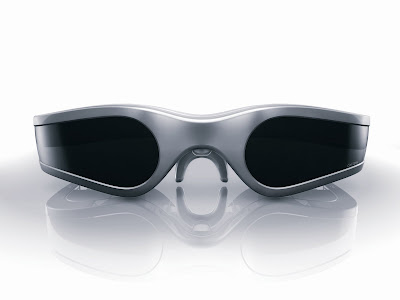
OBERKOCHEN/Germany, 25.09.2008. - According to Carl Zeiss, anyone that wants to watch television or movies on Nokia's new N96 multimedia mobile phone in real cinema quality should purchase the cinemizer video eyewear. The cinemizer is currently on display in Cologne at the photokina trade fair (Hall 02.1, booth C019). The 115 gram video goggles simulate a more than one meter movie screen at a distance of two meters. The mobile movie screen can be connected to either the new N96 super class mobile phone or its predecessor, the N95. The N96 offers a unique feature: In addition to all video formats, the TV signal from the integrated DVB-T receiver is displayed on the video eyewear without loss of quality.

“Anyone that has experienced their favorite show, a TV movie, a music clip, a YouTube video or a soccer game on the cinemizer screen, will no longer be satisfied with a standard screen, not to mention a small phone display,” states Andreas Klavehn, Marketing Multimedia Devices Manager at cinemizer developer Carl Zeiss.

Source: Carl Zeiss

>> Keep Reading: Full Post and Comments

Thursday, September 18, 2008

Carl Zeiss Launches New 21mm Super Wide Angle Lens for SLR Cameras

Distagon T* 2.8/21: A legend returns

OBERKOCHEN/Germany, 16.09.2008. The legendary Distagon T* 2.8/21 is now being introduced for SLR cameras with EF, F and K bayonets. Thanks to its excellent performance, this modernized version from the former Contax system sets new standards in this focal length class. “The outstanding correction of chromatic aberration enables photos without color fringes even in high-contrast light conditions”, says Martin Klottig, Marketing Manager, Carl Zeiss Camera Lens Division. “Even at full aperture, the floating element design ensures optimum edge-to-edge image quality over the entire focusing range. And even in difficult light conditions, the new Distagon provides excellent results thanks to its T* coating, optimum reflection reduction and exceptional chromatic correction.”

The shortest possible distance setting of only 0.22 m makes the lens ideal for impressive perspectives. Typical applications include architectural, journalistic and landscape photography.

The Distagon 2.8/21 is available with an EF bayonet (ZE), F bayonet (ZF) and a K bayonet (ZK). It is suitable for both digital and analog full-format SLR cameras.

Delivery of the Distagon T* 2.8/21 is scheduled to begin by the end of this year with the ZF and ZK version. Its selling price is estimated at 1,399 euros (incl. 19% German VAT).

Source: Carl Zeiss

>> Keep Reading: Full Post and Comments

Monday, September 15, 2008

ZE – Carl Zeiss SLR lenses now also with EF bayonet

More optics for everyone.

OBERKOCHEN/Germany, 15.09.2008. Carl Zeiss is expanding its successful line of SLR lenses: ZE lenses with EF bayonet for all analog and digital EOS camera models. As with all EF lenses, the new ZE lenses from Carl Zeiss transfer all information exclusively via electronic contacts. This means that all exposure modes such as programmed auto exposure, shutter priority, aperture priority and manual setting are supported. The camera’s automatic focus confirmation also remains available to an unlimited extent with these manual focus lenses. With digital SLRs, the lens data and all exposure data can also be accessed via the camera’s EXIF file. Even E-TTL flash metering is supported. The first lenses to be available will be the Planar T* 1.4/50 ZE and the Planar T* 1.4/85 ZE in the last quarter of this year. Further focal lengths will be added to the line within the next few months.

Source: Carl Zeiss, Inc.

>> Keep Reading: Full Post and Comments

Tuesday, September 9, 2008

SONY - NEW PREMIUM LENSES SUPPORT FULL-FRAME ALPHA DSLR CAMERA


SAN DIEGO, Sept. 9, 2008 – Sony is expanding its number of high performance Carl Zeiss® and G Series lenses with the addition of the new SAL1635ZA and SAL70400G models.

Vario Sonnar T* 16-35mm f/2.8 ZA Carl Zeiss Series Lens

The SAL1635ZA model is a super wide angle 16-35mm f/2.8 constant aperture zoom lens, well-suited for landscape, snapshot and indoor photography.

It is constructed of 17 lens elements in 13 groups, including an extra-low dispersion (ED) for exceptional clarity and center-to-edge resolution and a super ED glass element for much stronger correction of chromatic aberration or discoloration. It also features three aspherical lens elements that provide greater brightness from center to the edge of the image field.

Its Carl Zeiss T* (T star) coating technology provides higher light transmission, and minimizes flare to produce images of luminous clarity, color and sharpness.

The SAL1635ZA lens offers the utmost flexibility in challenging lighting conditions due to its wide f/2.8 constant aperture. Combined with Sony’s in-camera SteadyShot® Inside image stabilization system, this lens is the only large aperture, full-frame capable, wide-angle zoom lens with the benefit of stabilization in the industry.

Smooth, fast and precise focusing is delivered by Sony’s Super Sonic wave Motor (SSM) autofocus drive system. It utilizes a solid-state focus drive motor to provide silent, high-speed response, powerful torque and fine rotational control – critically important for large wide-aperture lenses.

70-400mm f/4-5.6 G Series Lens

The SAL70400G lens is a 5.7x super telephoto zoom lens and the latest addition to Sony’s G-series line of premium lenses. Designed to deliver extremely sharp descriptive performance across its wide focal length range, it is ideally suited for sports, action and wildlife photography.

Constructed of 18 elements in 12 groups, it includes two extra-low dispersion glass lenses for high contrast, sharp details, and exceptional center-to-edge resolution with minimal chromatic aberration. A circular aperture with nine diaphragm blades is utilized to achieve natural, aesthetically-pleasing de-focusing effects.

With a minimum focus distance of 1.5m and maximum magnification of 0.27x, the lens delivers best-in-class performance.

Like the SAL1635ZA lens, focus drive is provided by its SSM system, which offers the speed and rotational precision often required for telephoto shooting. Additionally, the lens has an internal focusing system for faster auto focusing.

A focus-mode/range switch and three focus-hold buttons have been added to the lens barrel for enhanced operability.

For both models, when attached to the flagship α900 camera body, the AF hold buttons can be customized to activate the intelligent preview function.

Price and Availability

The Vario-Sonnar T* 16-35mm f/2.8 ZA and 70-400mm f/4-5.6 G lens will ship in January 2009 for about $1,800 and $1,500, respectively. They will be available at sonystyle.com, at Sony Style® retail stores (www.sonystyle.com/retail), at military base exchanges, and at authorized dealers nationwide.

Source: Sony

>> Keep Reading: Full Post and Comments

Advertisement – Deals